
A tennis shot depends on the contact of the ball with the strings. The centre of this exchange is the string tension of your racket. String tension shapes the trajectory of a tennis ball as it leaves the racket. This may slightly reduce directional precision for flatter shots.
String tension alters the ball's speed and the feedback you feel in your hand. Minor adjustments create noticeable differences. You do not need a new racket or a new technique to feel it. The change is immediate. This blog will help you understand how string tension shapes your shots.
String tension refers to how tightly the strings are pulled inside your racket frame. It is measured in pounds or kilograms and set during the stringing process. The higher the string tension, the tighter the strings are and vice versa.
String tension decides how much the strings flex when the ball hits them. That split second of contact shapes how the racket feels, and the ball reacts.
For stringing a racket, a specific stringing machine is used that pulls each string to the desired tension and locks it in place. With every use of the racket, the string tension drops. This is the reason players need to restring their rackets after a certain period of time.
The table below provides a general overview of different string-tension ranges and their effects on the game.
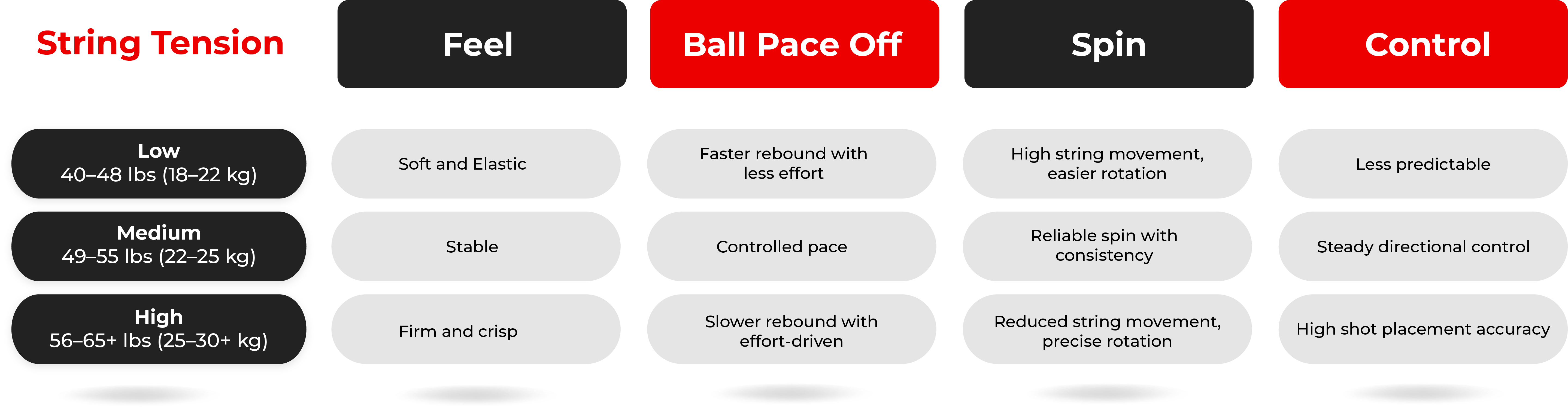
For more details, read Understanding String Tension in Different Rackets.
String tension shapes how the ball reacts upon contact with the strings. It influences shot pace, spin, control and the feel you get on every hit. Even minor tension changes can alter consistency and confidence during play.
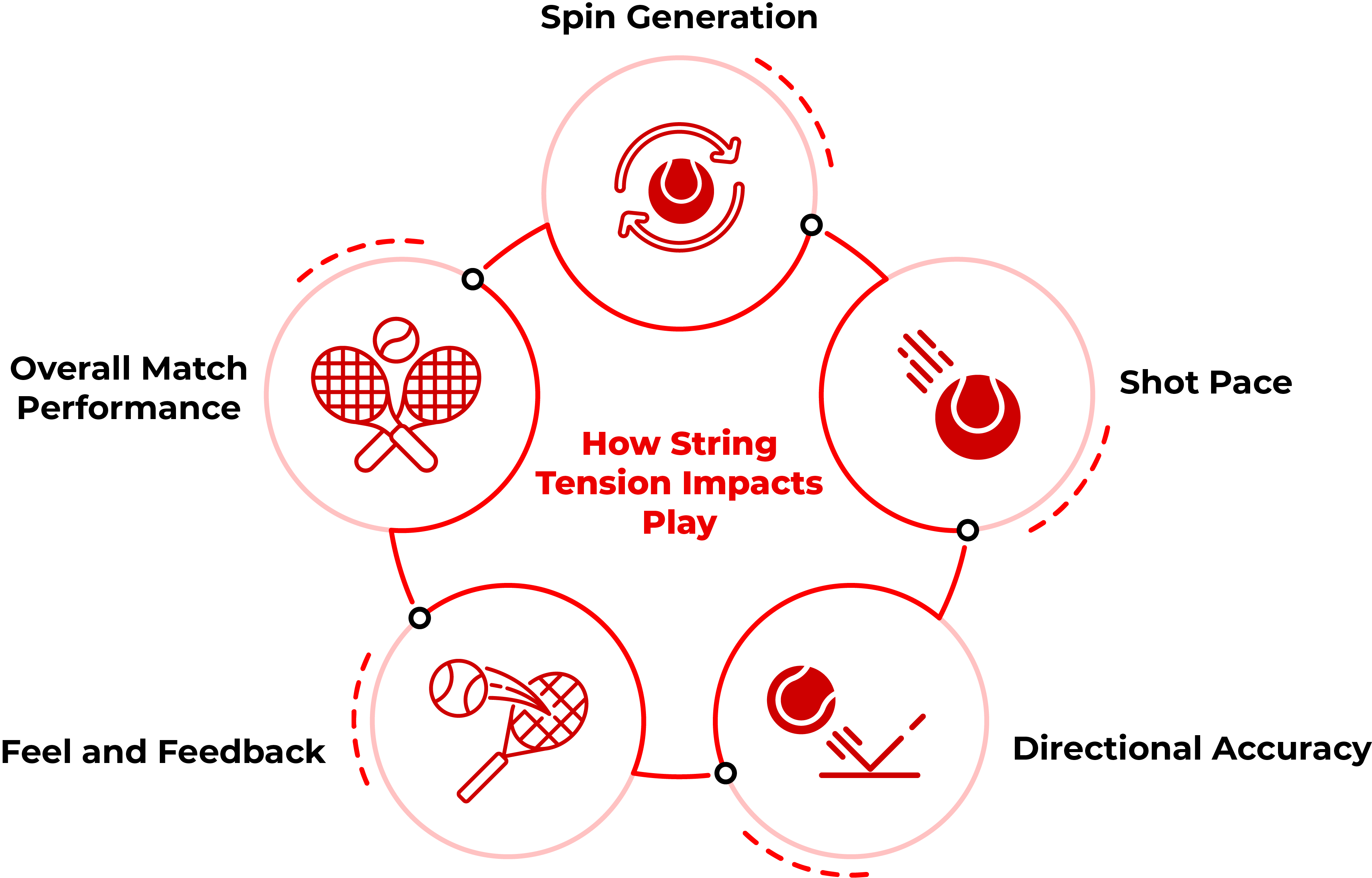
String tension directly affects how much the strings stretch and grip the ball. Lower tension allows the strings to stretch and shift more during contact. As they return to position, they increase ball rotation. This is most noticeable on topspin shots from the baseline, where extra rotation helps control depth and bounce.
Higher tension limits string movement. The ball leaves the strings more quickly, producing steadier but lower rotation. This suits flatter strokes, where predictability is more important than heavy spin.
Lower string tension increases the strings' rebound. The ball comes off the racket faster with less effort, which benefits players who rely on shorter swings or steady rallying. Depth becomes easier to achieve, especially on defensive shots.
Higher tension reduces rebound. Shot pace depends more on swing speed rather than string response. This gives stronger players tighter control over depth but requires consistent timing to avoid leaving shots short.
Tighter strings deform less when they come in contact with the ball. This maintains consistent ball trajectories and improves placement. Players aiming for precise targets on serves and groundstrokes often favour higher tension for this reason.
Looser strings increase the ball launch angle. Shots clear the net more comfortably but require better judgment to maintain placement. This does not affect accuracy, but hitting very flat shots becomes slightly less precise.
Lower string tension softens the impact of the ball on the strings. Vibrations are reduced, and the racket feels more forgiving on off-centre hits. This helps during long sessions and supports arm comfort.
Higher tension gives a clearer feel of the ball on the strings, sharpening the feedback. You feel contact clearly, which supports quick technical adjustments. The response is firmer and less forgiving, especially on mishits.
Match performance depends on the balance between power and control. Lower tension supports consistency, comfort, and rally tolerance. Higher tension supports placement, confidence in aggressive shots, and control under pressure.
The right tension reflects how you swing, how often you play, and what you expect from your racket during match play. Even minor adjustments shift how the racket behaves and how confidently you execute your shots.
The right tension for a player is one that balances spin, power and accuracy. They can decide on a string tension based on their style and preferences, such as heavy topspin, fast shots or precise placement. Any tension adjustments can shift this balance noticeably, allowing you to fine-tune how your racket behaves on each shot.
In short, no single tension is perfect for every situation. The key is to match your string setup to your swing, playing style and the type of shots, you rely on during matches.
Suitable string tension starts with knowing how your racket responds to your swing. Following guidelines help you make simple, informed adjustments that suit your comfort and playing style.
1. Start Within the Manufacturer's Range: Use the tension range printed on your racket as a safe baseline. It protects the frame and gives you room to adjust without risking damage.
2. Match Tension to Your Swing Speed: Faster swings usually suit firmer strings because the racket does less work for you. Slower or shorter swings often feel better with looser strings that respond more easily.
3. Adjust Based on Playing Style:
Heavy topspin players often prefer slightly lower tension for added string movement. Flatter hitters typically select higher tension to achieve steadier ball paths.
4. Consider Your Skill Level: Beginners benefit from lower to mid tension for comfort and forgiveness. Intermediate players often settle in the middle range. Advanced players fine-tune tension for precision and feel.
5. Factor in String Material: Polyester strings feel firm and are commonly strung lower. Multifilament and synthetic gut feel softer and are often strung at tighter tensions. Natural gut works well across a wide range.
6. Consider Arm Comfort: If you experience elbow or wrist discomfort, reduce tension slightly. A small drop can soften impact without changing your game dramatically.
7. Make Small Changes Only: Adjust tension by one or two pounds at a time. Even small changes affect how the racket responds, and gradual shifts help you identify what works best.
8. Account for Playing Conditions: Hot weather loosens strings faster. Cold conditions make them feel firmer. Adjust tension slightly if you play often in extreme temperatures.
9. Track What You Like: Keep notes on tension, string type, and how the racket feels in matches. This helps you repeat setups that perform well for your game.
String tension plays a decisive role in a racket's on-court response. Minor changes in string tension influence spin, pace, accuracy, and comfort to a greater extent than many players expect. There is no single setting that suits everyone. The right choice reflects your swing, playing frequency and arm comfort during long sessions. With gradual adjustments and attention to feedback, you can settle on a setup that supports consistency and confidence in every match.